Publications
All 28 publications, newest first. Each entry states what it is: a journal article, a full paper, a short, workshop or companion paper, late-breaking work, a demo, or a poster. Citation counts are on Google Scholar.
No publications of this type.
2026
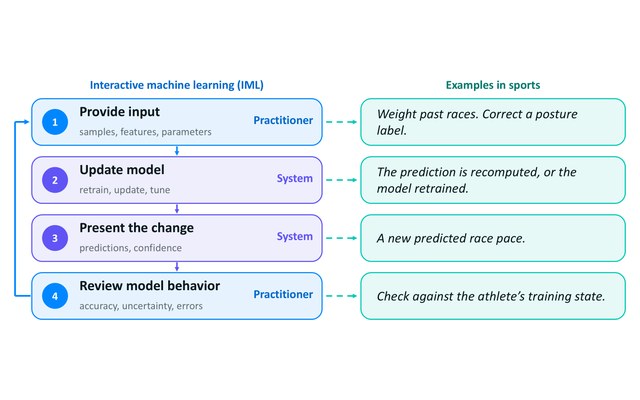
Why Sports Needs Interactive Machine Learning
An essay arguing that machine learning delivers little in sports while practitioners lack control over the models, and proposing interactive machine learning as the remedy.
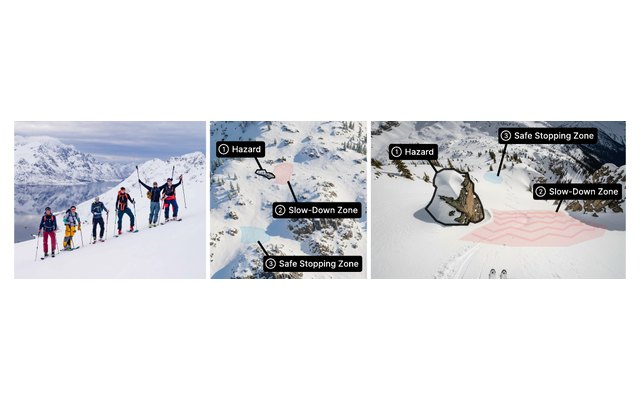
Heads Up!: Towards In Situ Photogrammetry Annotations and Augmented Reality Visualizations for Guided Backcountry Skiing
Tools with which a backcountry guide annotates a photogrammetry map of a mountainside with hazards and safe zones, which the skiers then see as overlays in an augmented reality heads-up display.
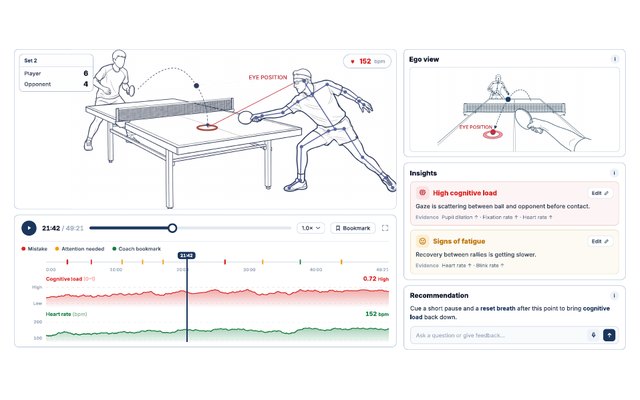
Understanding and Designing a Gaze-Based Interface for Table Tennis
Interviews with a coach and three table tennis players, and from them EyeCoach, a concept for a coach-facing interface that gives personalised training feedback from gaze and other signals.
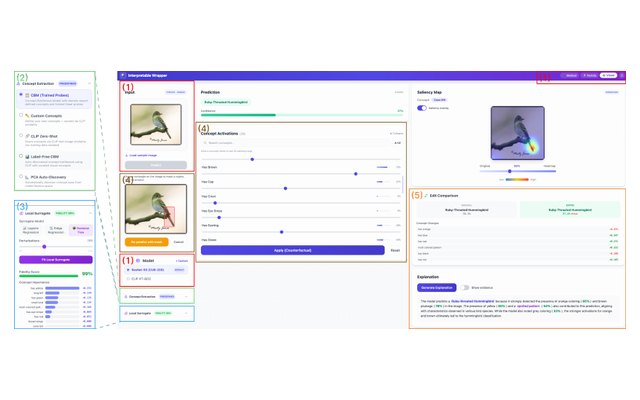
ConceptLens: Interactive Concept Bottlenecks for Black-Box Models
A model-agnostic interface for probing pre-trained classifiers through semantic concepts: local fidelity checks, what-if analysis, counterfactual search and refinement of the concept probes by the user.
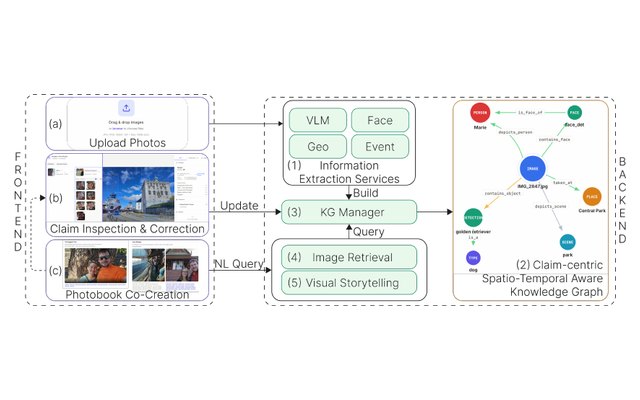
PhotoGraph: Claim-Centric Knowledge Graphs for Personal Photo Management
A knowledge graph for personal photo collections that stores model outputs as evidence-grounded claims, so that answers come with justifications and corrections persist.
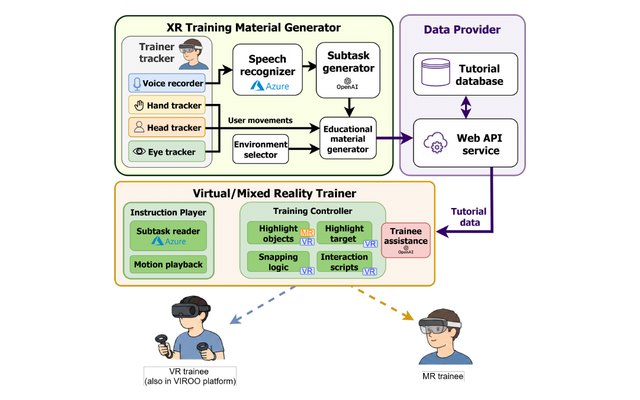
AI-Assisted Tutorial Generation for Immersive Training in Virtual and Mixed Reality
A framework that turns one recorded expert demonstration, with speech, hand movements, head pose and gaze, into a step-by-step tutorial for training in VR and MR.
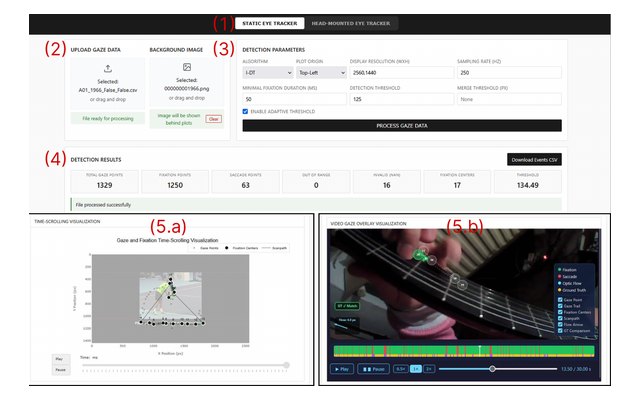
OpenGazeLab: An Interactive Toolkit for Gaze Analysis and Event Detection
A browser-based toolkit for detecting fixations and saccades in data from stationary and head-mounted eye trackers, with a timeline view for checking the results.
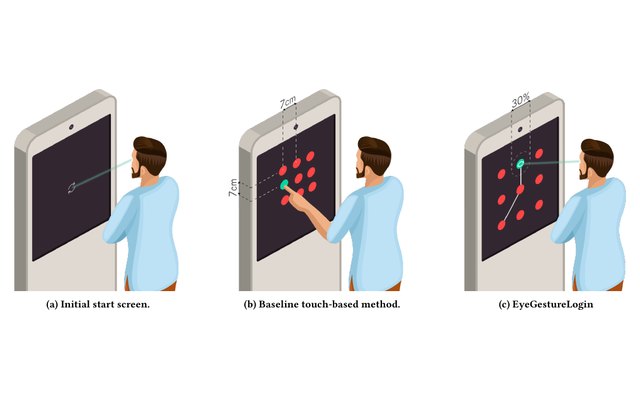
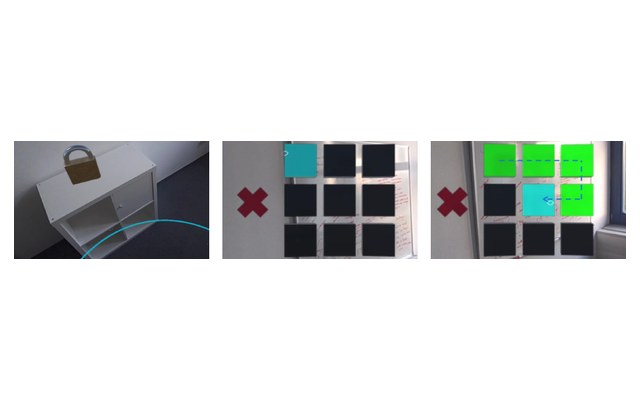
EyeGestureLogin: Spontaneous Hands-Free Gaze-Based Lock Pattern Authentication for Public Displays
A touch-free method for entering a lock pattern on a public display with the eyes, without explicit calibration; it reached 91.59% accuracy in a study with 24 participants.
GTK: A Gaze-Based Interaction Toolkit in XR
A reusable Unity toolkit with gaze interactables, spatial context menus, onboarding, attention monitoring and accuracy checks.
DOI PDF (accepted version) Abstract Code Video Teaser Demo paper
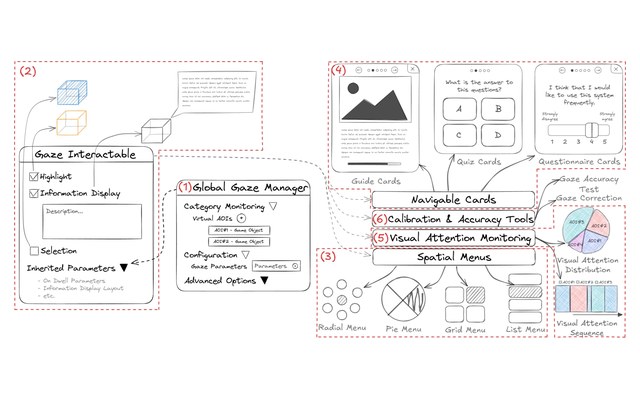
GTK: An Open-Source Toolkit for Gaze-Based Interaction in XR
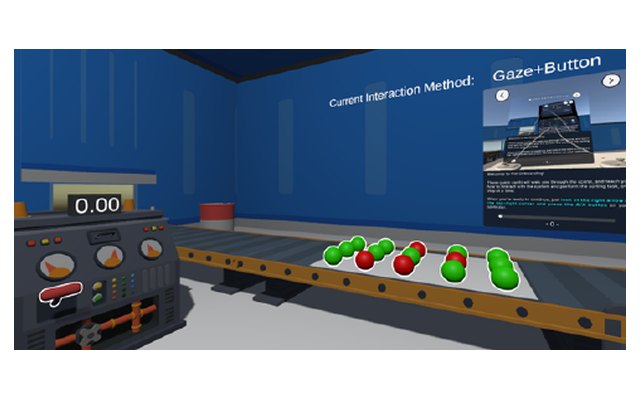
The demo of GTK: an industrial sorting task that introduces users step by step to gaze-assisted interaction techniques.
DOI PDF (accepted version) Abstract Video Teaser Workshop paper
GazeDrift: A Balloon-Popping Serious Game for Eye Tracking Troubleshooting in VR
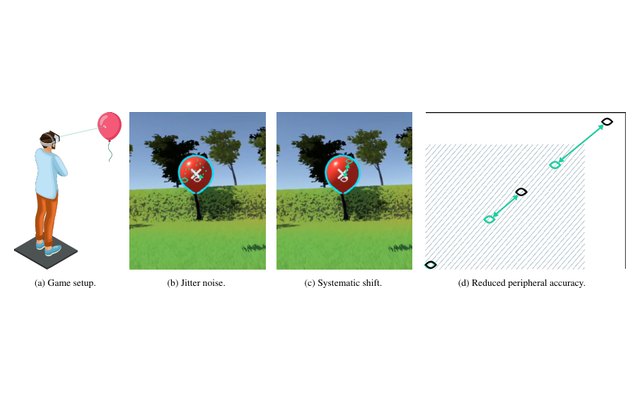
A game that lets users experience jitter, systematic gaze shifts, reduced peripheral accuracy and the Midas touch, so that they recognise these eye-tracking problems later.
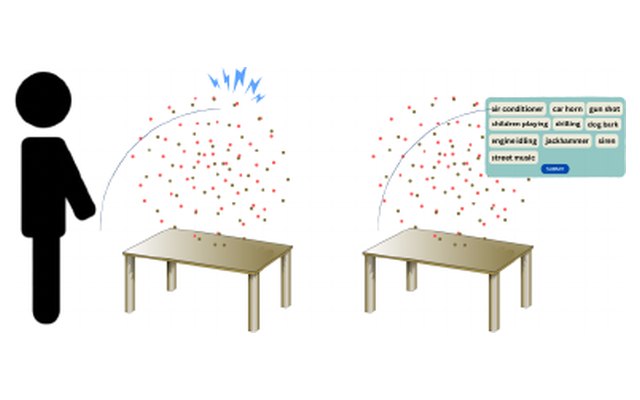
User-Centric Active Learning Through Immersive Visualization
A VR system in which users explore and annotate samples inside the 3D embedding space of an audio classifier, with visual cues for uncertainty, density, diversity and class coverage.
2025
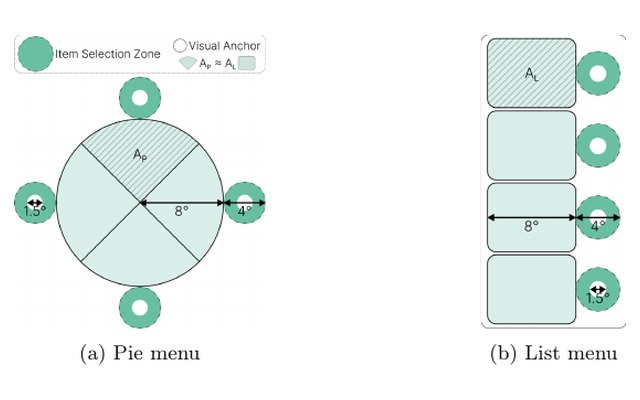
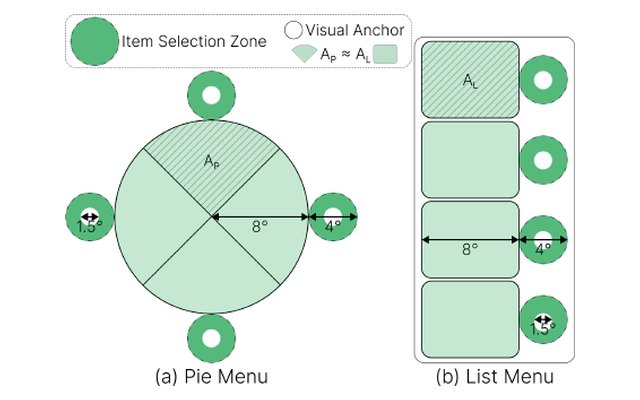
Gaze-Based Menu Navigation in Virtual Reality: A Comparative Study of Layouts and Interaction Techniques
A study with 19 participants that compares pie and list menus under dwell, controller and combined gaze-and-controller input: the pie layout was faster and less error-prone, while novice users tended to favour lists.
I-MPN: Inductive Message Passing Network for Efficient Human-in-the-Loop Annotation of Mobile Eye Tracking Data
A human-in-the-loop method for recognising objects in mobile eye-tracking recordings, which combines an object detector with a message passing network that takes the spatial relations between objects into account.
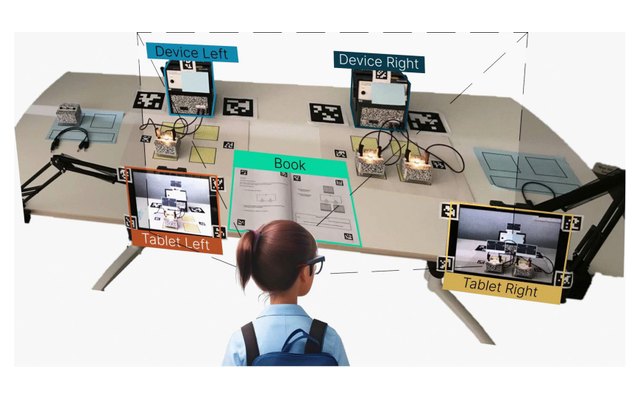
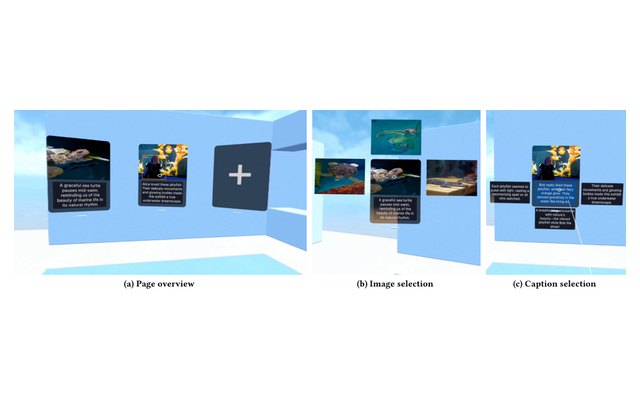
Interactive Multimodal Photobook Co-Creation in Virtual Reality
A VR system in which a user and deep learning models create a photobook together through speech, gaze and controller input, and the models learn from the user's behaviour.
Segmentation, Tracking, and Semantic Reconstruction Techniques in Complex Scenarios
Methods for tracking and segmenting laboratory rodents of identical appearance under occlusion, and for building 3D semantic maps that are shared between the viewpoints of a human and a robot. Supervised by András Lőrincz and Daniel Sonntag.

2024
GazeLock: Gaze- and Lock Pattern-Based Authentication
An authentication method for XR headsets in which the user draws a familiar lock pattern with the eyes, so that bystanders cannot observe the input.
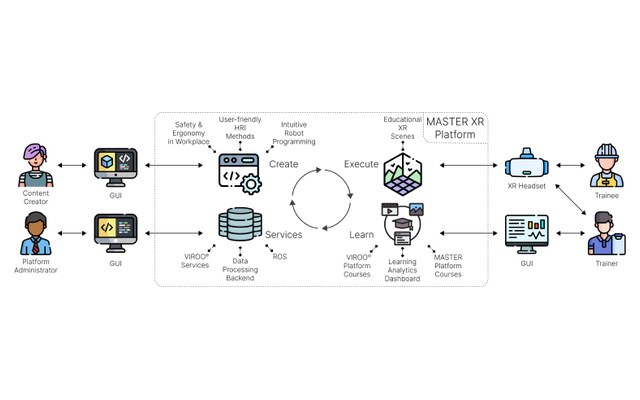
The MASTER XR Platform for Robotics Training in Manufacturing
An overview of the open XR platform of the MASTER project, with modules for safe workspaces, robot programming and human-robot interaction, including eye tracking.
Exploring Gaze-Based Menu Navigation in Virtual Environments
A first look at list menus for multi-level gaze-based menu navigation in VR, comparing dwelling and border crossing with controller input and with gaze combined with a button press.
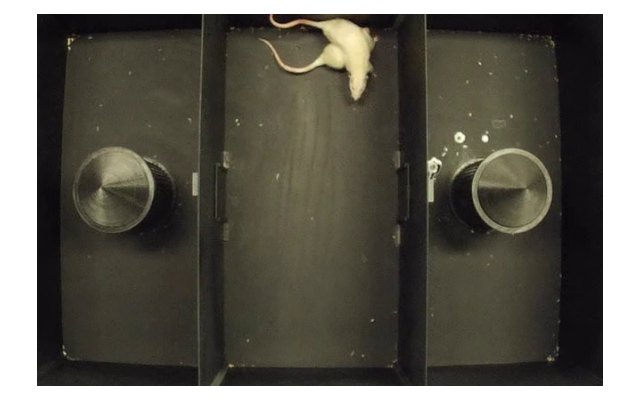
A Self-Supervised Method for Body Part Segmentation and Keypoint Detection of Rat Images
A method that trains a network for instance segmentation, keypoint detection and body part segmentation of laboratory rats on automatically generated annotations, without manual labelling.
2023
Cross-Viewpoint Semantic Mapping: Integrating Human and Robot Perspectives for Improved 3D Semantic Reconstruction
An extension of a real-time 3D semantic reconstruction pipeline that matches semantic labels between the viewpoint of a human and that of a small robot.
IMETA: An Interactive Mobile Eye Tracking Annotation Method for Semi-Automatic Fixation-to-AOI Mapping
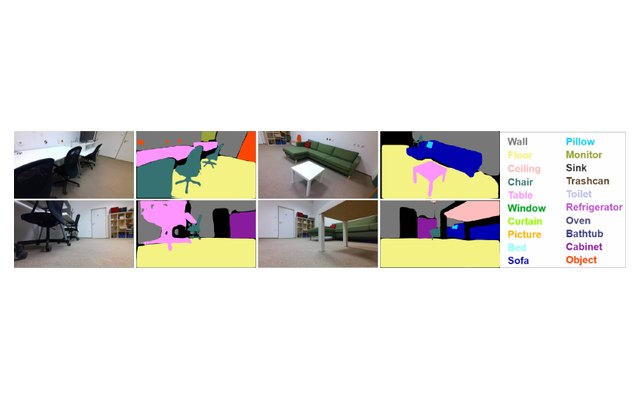
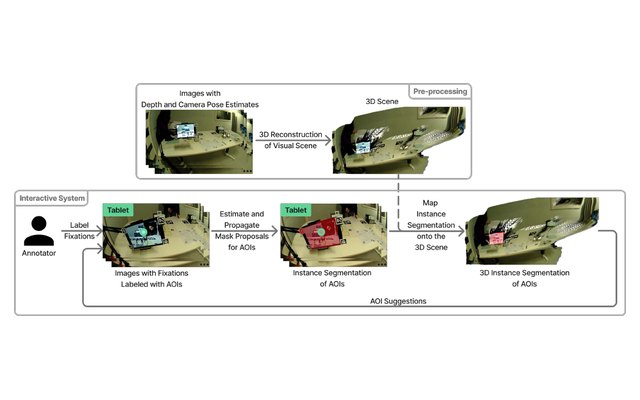
A semi-automatic method for mapping fixations to areas of interest in mobile eye-tracking recordings, based on interactive video object segmentation and a 3D reconstruction of the scene.
2022
Tracking Highly Similar Rat Instances under Heavy Occlusions: An Unsupervised Deep Generative Pipeline
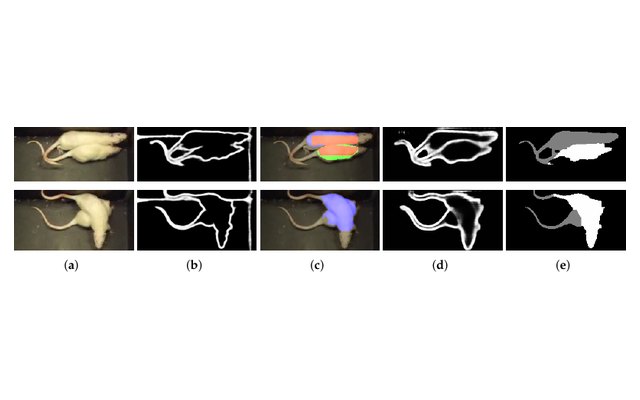
A pipeline of deep generative models for tracking and segmenting highly similar animals such as white rats, trained on synthetic data and using edge information to resolve heavy occlusions.
2021
Speech De-identification with Deep Neural Networks
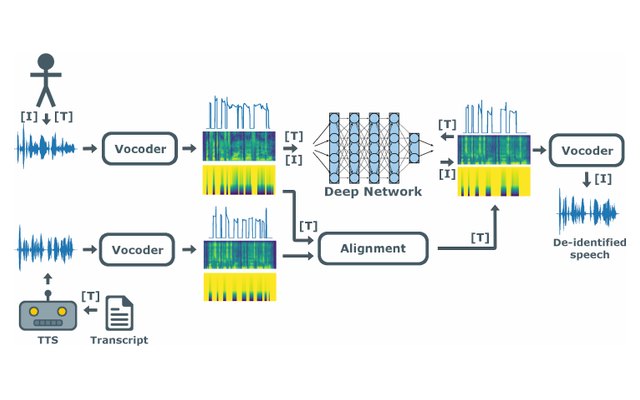
A neural network that removes personal characteristics from speech by converting it to the voice of a text-to-speech system before the utterance is sent to a cloud service.
RATS: Robust Automated Tracking and Segmentation of Similar Instances
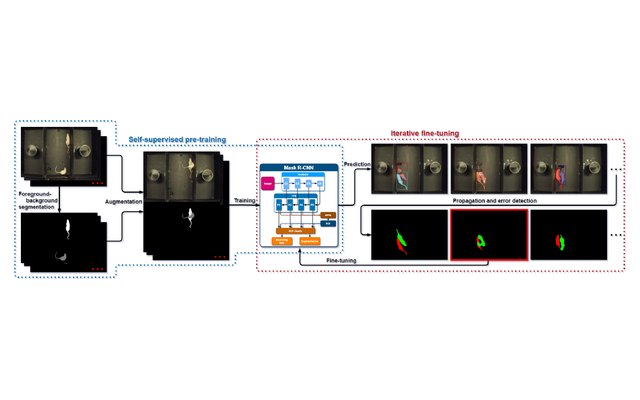
A deep learning approach for segmenting and tracking laboratory animals of identical appearance, which marks the frames where it is unreliable so that a human can annotate them.
2020
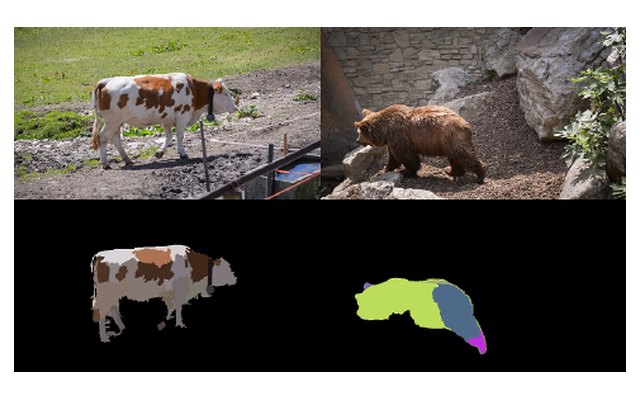
Multi Object Tracking for Similar Instances: A Hybrid Architecture
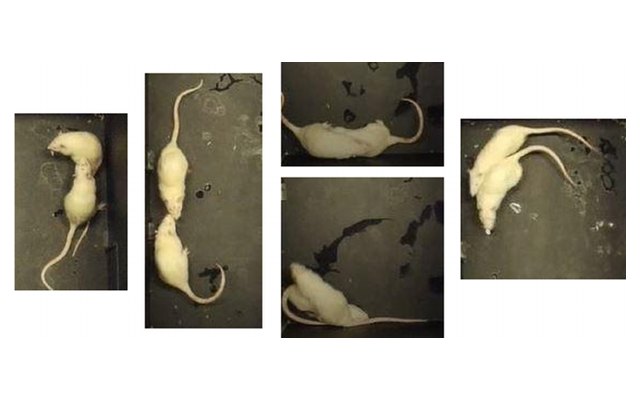
Cluster R-CNN, an architecture that segments object instances by clustering and tracks them across frames, developed for laboratory animals of highly similar shape.
2019
Skeletonization Combined with Deep Neural Networks for Superpixel Temporal Propagation
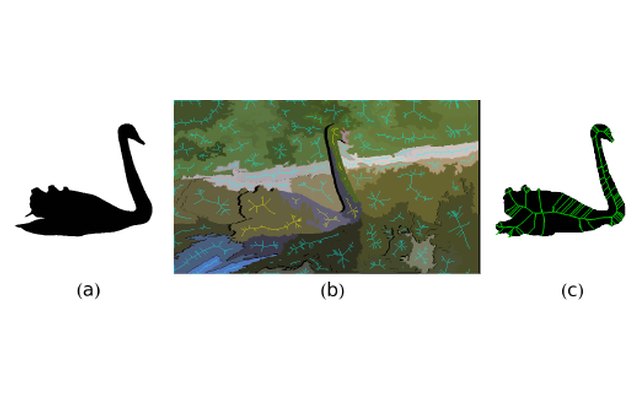
A method that propagates superpixels from frame to frame by combining networks for optical flow and depth estimation with the medial axis transformation.
Common Fate Based Episodic Segmentation by Combining Supervoxels with Deep Neural Networks
A fast video segmentation method that uses motion only, combining optical flow with a hierarchical supervoxel algorithm, after the Gestalt principle of common fate.